Support Renewable Energy
www.SupportRenewableEnergy.com

Support Renewable Energy and the American Energy Plan!


Support Renewable Energy

Ad Space Available Through the Renewable Energy Institute


Renewable Energy Institute


For more information, call/email the
Renewable Energy Institute

info@SupportRenewableEnergy.com

________________________________________________________

“spending hundreds and hundreds and hundreds of billions of dollars every year for oil, much of it from the Middle East, is just about the single stupidest thing that modern society could possibly do.  It’s very difficult to think of anything more idiotic than that.”

- R. James Woolsey, Jr., former Director of the CIA


Price of Addiction
###
to Foreign Oil


________________________________________________________

Solving America's Energy Problems With the:

American Energy Plan sm

www.AmericanEnergyPlan.com

"America has NEVER had an 'Energy Plan.' 
It's time for America to have an 'Energy Plan.' 
And an 'Energy Plan' WITHOUT any Foreign Oil."

~ Monty Goodell - President, Renewable Energy Institute

www.AmericanEnergyPlan.com 

info@AmericanEnergyPlan.com

No Foreign Oil!
www.NoForeignOil.com


Support Renewable Energy 

and the 

American Energy Plan!

________________________________________________________

For more information, call/email the
Renewable Energy Institute

info@SupportRenewableEnergy.com


________________________________________________________

Support Renewable Energy
www.SupportRenewableEnergy.com

Support Renewable Energy and the American Energy Plan!


According to R. James Woolsey, former Director of the Central Intelligence Agency:

"The basic insight is to realize that global warming, the geopolitics of oil, and warfare in the Persian Gulf are not separate problems - 
they are aspects of a single problem, the West's dependence on oil."

____________________________________________________


GreatSkin.com

____________________________________________________

Increased Use of Renewable Energy and Decreased Use of Foreign Oil 
Will Solve Many Problems Facing America


It's Time to "Support Renewable Energy" and begin a transition from an economy 
based on fossil fuels, to an economy based on renewable energy.

Problems relating to Fossil Fuels


America's Clear and Present Danger

Wars and world wars are the future for countries that continue to be dependent on fossil fuels they must import from foreign countries to meet their demand for energy.

Peak oil is a reality and with a growing India and China - they will be using more oil every year, and place additional demands on a finite supply of oil available each day.  There is nowhere but "up" in terms of how much oil will cost in the next 2-3 years, particularly after the global recession and America's "depression" is over.

As international demand for oil continues to increase, the price of oil will increase.  Most of Europe pays $7.00 to $8.00 per gallon for gasoline already. In the USA, gasoline recently exceeded $4.00/gallon.  While the USA cannot "turn off" its dependence on fossil fuels overnight, we need to begin the transition to an economy free of fossil fuels. This may take 30 years, and in the interim, the USA needs to transition away from buying oil from foreign countries, particularly from OPEC and middle east countries and begin producing the oil and natural gas from our own country.

Fossil fuels and a country's dependence on them causes wars and an unstable economy. Is there any other reason for America's "treasure" to be in OPEC countries, except to "safeguard" our access to their country's oil resources?!?

Increased dependence on fossil fuels = increased likelihood a country will be involved in a war.  

Increased dependence on renewable energy = greater likelihood a country will be less likely to be involved in a war.

The quicker that a country ramps up its use of renewable energy, the sooner that country will see long-term peace and prosperity.

America spends over $1.3 billion every day, importing the oil it needs, much from counties that support terrorism, and don't like the U.S.  The U.S. only produces 7 million bbls/oil/day, yet we need 20 million bbls/oil/day or America's economy shuts down.

Climate Change:

The Renewable Energy Institute does not take a stand on whether man-made climate change is happening or not.  However, how can the "dumping" of 30 Billion metric tons of carbon dioxide emissions (one of the "dirty six" greenhouse gas emissions) each year (in the U.S.) that are produced from "man-made" combustion of fossil fuels into the atmosphere each year, be a good thing? 

The earth's ecosphere can only absorb about half of the carbon dioxide emissions each year. Dumping billions of tons of carbon dioxide emissions into the atmosphere through fossil fuel combustion, cannot go on indefinitely, and will reach a "tipping point" at which point "dangerous interference" or "dangerous climate change" becomes irreversible. 

And the climate's recent history of year-after-year of increasing temperatures, and increased losses of the Arctic and Antarctic ice, lends us to believe, something is up with the climate, and it does not appear to be a good thing.


Fossil Fuels are Dirty Fuels
:

Combustion of fossil fuels produces air pollutants, including; carbon monoxide, mercury, nitrogen oxides, sulfur dioxide, volatile organic compounds and heavy metals.  Combustion of fossil fuels generates carbonic acid, sulfuric acid, and nitric acid, which returns to the environment "acid rain." Fossil fuels also contain radioactive materials, mainly uranium and thorium, which are released into the atmosphere. In the year 2000, about 12,000 tons of thorium and 5,000 tons of uranium were released globally from burning coal.

Mercury emissions are particularly toxic as mercury, when ingested, is a lethal neurotoxin that is integrated and passed from the bottom to the top of the food chain.  5,500 tons of mercury emissions entered the global environment in 1995. These mercury emissions have had a devastating effect on marine life.  This is the reason why women who are pregnant must limit their intake of fish - women who eat fish expose their unborn baby to numerous health defects including brain damage, liver damage and kidney damage, from the mercury in the food supply. High levels of mercury can have a toxic effect on the nervous systems of humans. The term "mad hatter" derives from the fact the mercury was used in leather tanning to make hats in previous centuries, and some people developed nervous disorders from continuous exposure to high mercury levels. 


Renewable Energy Potential in the U.S.

Renewable Energy Technologies and Renewable Energy Resources now generate about 7% of America's energy requirements.  Yet, generating America's power and energy requirements has the potential of supplying 85% of America's energy requirements - in the next 10 years - and at prices competitive with fossil fuels!

New Jobs:  Over 1 million new jobs can be created by meeting America's energy requirements via renewable energy.


What is Renewable Energy?

Renewable Energy is defined as any energy resource that is naturally regenerated over a short time scale and derived directly from the sun (such as thermal, photochemical, and photoelectric), indirectly from the sun (such as wind, hydropower, and photosynthetic energy stored in biomass), or from other natural movements and mechanisms of the environment (such as geothermal and tidal energy). Renewable energy does not include energy resources derived from fossil fuels, waste products from fossil sources, or waste products from inorganic sources."

_______________________________________________________

About us:

We provide engineering and renewable energy project development services including, including;

Our work is performed on a strict adherence to "vendor-neutrality." We are client and project focused and seek to maximize our client's return on their investment while simultaneously minimizing their operational expenses and environmental exposure. 

Engineering and related interim project development expenses may be at client's expense but will be refunded at the close of Power Purchase Agreement or other project financing.  Some of our engineering and related EPC services provided by top-ranked ENR Engineering/EPC companies.


For qualified clients we will design, build, finance, own, operate and maintain a new:

Cogeneration

EcoGeneration

Trigeneration

Waste Heat Recovery

energy system, through a Power Purchase Agreement that guarantees  
a minimum 10% reduction in our client's energy expenses.

(NOTE:  Engineering and related interim project development expenses may be at client's expense but 
will be refunded at the close of Power Purchase Agreement or other project financing.  Some of our 
engineering  and EPC services may be provided by Top-ranked ENR Engineering/EPC companies.) 


To receive a preliminary no obligation consult, send us a summary about your energy, engineering or renewable energy project.

info@SupportRenewableEnergy.com

____________________________________________________

What are "Distributed Energy Resources"?

Distributed Energy Resources (DER) are small, modular, energy generation and energy storage systems and technologies that provide electric capacity or thermal energy (i.e. hot water, chilled water, steam) where and when a commercial or industrial client requires.

Typically, Distributed Energy Resources generate less than 10 MW (megawatts).

Distributed Energy Resources are highly flexible and adaptable, and can therefore, be sized to meet any customer's specific power and energy requirements, at the customers facility or business.

As they are flexible and adaptable for nearly any customer's specific requirements, DER systems can be installed to operate with the local electric grid, or be designed and installed "grid-free" without connecting to the electric grid in island or stand-alone mode.

Distributed Energy Resources' technologies include those that end America's dependence on foreign oil, and therefore include;


Energy Investment Banking
__________________________

www.EnergyInvestmentBanking.com

_________________________________________

The market for Distributed PV, also known as "Rooftop PV"
will be a $60 billion/year market by 2013!

_________________________________________


How are
Distributed Energy Resources systems and DER technologies used?


Distributed Energy Resources systems can be used in several ways including managing/reducing energy expenses and ensuring reliable power by augmenting your current energy services.

Distributed Energy Resources systems also enable a facility to operate independently of the electric power grid, whether by choice or out of necessity.

Distributed Energy Resources improve a customer's "carbon footprint" by significantly reducing their greenhouse gas emissions and increasing overall energy efficiency.

Utilities can use Distributed Energy Resources technologies to delay, reduce, or even eliminate the need to obtain additional power generation, transmission, and distribution equipment and infrastructure. At the same time, DER systems can provide voltage support and enhance local reliability.

Distributed Energy Resources are an ideal "demand side management" solution.


How do I know if
Distributed Energy Resources systems and Renewable Energy Technologies are the right choice for my facility?

In today's economy and increasing pressure for businesses to reduce their greenhouse gas emissions, there are several economic and environmental factors making Distributed Energy Resources a serious option and alternative. These include the high prices of electricity from the electric grid/electric utility company as well as high natural gas costs from the natural gas utilities. Uncertainties regarding foreign oil, "peak oil" and the ever-increasing potential for disruptions in electricity service and oil from foreign oil countries are causing managers and CEO's of businesses to consider alternatives to traditional energy providers and for new ways to supplement or augment their present energy situation and present suppliers.

This is particularly crucial where a facility’s energy-producing and electric grid infrastructure are aging. The performance, cost, and availability of DER technologies have all been improving steadily over the past several years. New Distributed Energy Resources systems and technologies are significantly more efficient than even ten years ago. Replacing or upgrading your present energy problems with Distributed Energy Resources may pay for itself sooner than expected.

Energy security as well as price of energy has never been a greater concern to businesses and their managers/CEO's and CFO's. Distributed Energy Resources systems can provide the requisite power and energy needed for mission-critical loads, reduce hazardous or costly power outages, and diversify the local energy supply.


What is "Cogeneration"?

Did you know that 10% of our nation's electricity now comes from "cogeneration" plants?

And because cogeneration is so efficient, it saves its customers up to 40% on their energy expenses, and provides even greater savings to our environment through significant reductions in fuel usage and much lower greenhouse gas emissions.

Cogeneration - also known as “combined heat and power” (CHP), cogen, district energy, total energy, and combined cycle, is the simultaneous production of heat (usually in the form of hot water and/or steam) and power, utilizing one primary fuel such as natural gas, or a renewable fuel, such as Biomethane, B100 Biodiesel, or Synthesis Gas.

Cogeneration technology is not the latest industry buzz-word being touted as the solution to our nation's energy woes. Cogeneration is a proven technology that has been around for over 120 years!

Our nation's first commercial power plant was a cogeneration plant that was designed and built by Thomas Edison in 1882 in New York. Our nation's first commercial power plant was called the "Pearl Street Station."


What is "Trigeneration"?

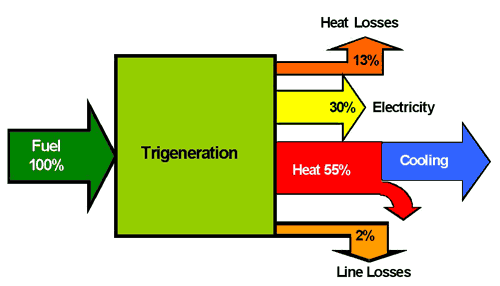
Trigeneration is the simultaneous production of three forms of energy - typically, Cooling, Heating and Power - from only one fuel input. Put another way, our trigeneration power plants produce three different types of energy for the price of one.  

Trigeneration energy systems can reach overall system efficiencies of 86% to 93%.  Typical "central" power plants, that do not need the heat generated from the combustion and power generation process, are only about 33% efficient.


Trigeneration Diagram & Description
Trigeneration Power Plants' Have the Highest System Efficiencies and are 
About 300 % More Efficient than Typical Central Power Plants


Trigeneration plants are installed at locations that can benefit from all three forms of energy.  These types of installations that install trigeneration energy systems are called "onsite power generation" also referred to as "decentralized energy."   

One of our company's principal's first experience with the design and development of a trigeneration power plant was the trigeneration power plant installation at Rice University in 1987 where our trigeneration development team started out by conducting a "cogeneration" feasibility study.  The EPC contractor that Rice University selected installed the trigeneration power which included a 4.0 MW Ruston gas turbine power plant, along with waste heat recovery boilers and Absorption Chillers.  A "waste heat recovery boiler" captures the heat from the exhaust of the gas turbine.  From there, the recovered energy was converted to chilled water - originally from (3) Hitachi Absorption Chillers - 2 were rated at 1,000 tons each, and the third Hitachi Absorption Chiller was rated at 1,500 tons. The Hitachi Absorption Chillers were replaced shortly after their installation by the EPC company.  The first trigeneration plant at Rice University was so successful, they added a second 5.0 MW trigeneration plant so today, Rice University is now generating about 9.0 MW of electricity, and also producing the cooling and heating the university needs from the trigeneration plant and circulating the trigeneration energy around its campus.


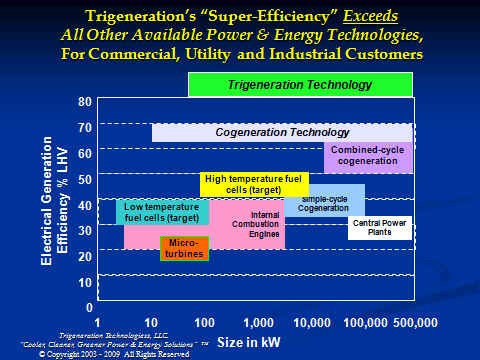
Trigeneration Chart
Trigeneration's "Super-Efficiency" compared 
with other competing technologies
As you can see, there is No Competition for Trigeneration!


Our trigeneration power plants are the ideal onsite power and energy solution for customers that include:  Data Centers, Hospitals, Universities, Airports, Central Plants, Colleges & Universities, Dairies, Server Farms, District Heating & Cooling Plants, Food Processing Plants, Golf/Country Clubs, Government Buildings, Grocery Stores, Hotels, Manufacturing Plants, Nursing Homes, Office Buildings / Campuses, Radio Stations, Refrigerated Warehouses, Resorts, Restaurants, Schools, Server Farms, Shopping Centers, Supermarkets, Television Stations, Theatres and Military Bases.

At about 86% to 93% net system efficiency, our trigeneration power plants are about 300% more efficient at providing energy than your current electric utility. That's because the typical electric utility's power plants are only about 33% efficient - they waste 2/3 of the fuel in generating electricity in the enormous amount of waste heat energy that they exhaust through their smokestacks.

Trigeneration is defined as the simultaneous production of three energies: Cooling, Heating and Power.  Our trigeneration energy systems use the same amount of fuel in producing three energies that would normally only produce just one type of energy. This means our customers that have our trigeneration power plants have significantly lower energy expenses, and a lower carbon footprint.


Our New "Integrated" Trigeneration Plants Have 
Very High Efficiencies & Low Fuel Costs

The Effective Heat Rate is Approximately 
4050 btu/kW & System Efficiency is 92% Plants Have 
Very High Efficiencies & Low Fuel Costs

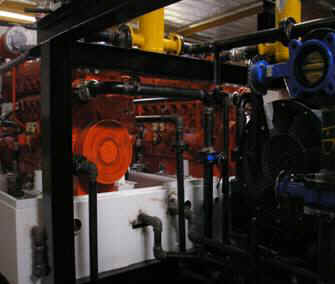
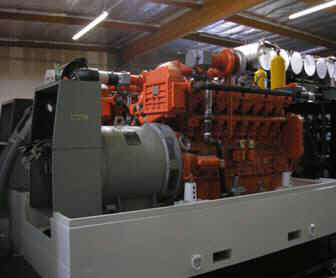
Pictures (below) of a Cogeneration Plant Presently Being Built for New Customer.  

This Cogeneration Plant is Rated at 900 kW and Features:
(2) Natural Gas Engines @ 450 kW each on one Skid with Optional 
Selective Catalytic Reduction
system that removes Nitrogen Oxides to "non-detect."
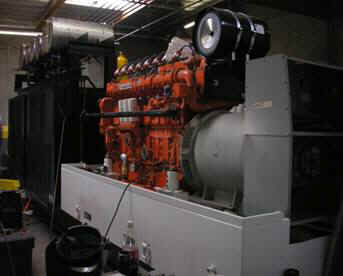


Our onsite trigeneration power and energy system can be an ideal solution for customers wanting increased power reliability and decreased energy and environmental costs.  A few of the types of buildings and businesses that would benefit from an onsite trigeneration plant include the following:

_______________________________________________________

What is the "Unified Smart Grid"?

The Unified Smart Grid is the name used for the future transmission power lines that would carry green electricity from the many solar power plants and solar power parks and wind farms that generate the power, typically in remote areas, to the "load centers" or major cities that would use the green power. 

Quite simply, our country's out-dated and inefficient National Electric Grid, lacks the ability to carry all the new green electricity being planned from hundreds of new solar power parks and wind power generation facilities.

The Unified Smart Grid will be a national interconnected network relying on a high capacity backbone of electric power transmission lines linking all the nation's local electrical networks that have been upgraded to smart grids. Europe's analogous project is sometimes referred to as the SuperSmart Grid, a term that also appears in the literature describing the Unified Smart Grid

Cost estimates to rebuild the nation's electric grid as a Unified Smart Grid have ranged from $350 billion to $450 billion.

Support for the unified smart grid came with passage of the Energy Independence and Security Act of 2007.   Title 13 of this Act invested $100 million in funding for the years 2008 – 2012 and establishes a matching program to states, utilities and consumers to build unified smart grid capabilities.  It also creates a Grid Modernization Commission to assess the benefits of demand response and automated demand response and recommended a set of system protocols and standards to be led by the National Institute of Standards and Technology which would coordinate the development of smart grid standards.  FERC would then promulgate these standards and protocols for the unified smart grid through its official rulemaking capabilities.

The Unified Smart Grid received further support with the passage of the American Recovery and Reinvestment Act of 2009 that set aside $11 billion for the creation of a smart grid.

Building a Unified Smart Grid would help jump-start the renewable energy investments in solar power parks.  Thousands of megawatts of new solar power parks (both Concentrating Solar Power plants and Photovoltaic Power Plants) are being planned. Most are  located in the desert Southwest due to the solar energy resource. A Unified Smart Grid is needed to move the large amount of power, which is fairly concentrated, to the rest of the nation.  Without the new Unified Smart Grid, it would be impossible to distribute the green power to the nation. 

The new Unified Smart Grid is significantly more efficient than the present, nearly 100 year old technology that makes up our nation's present transmission and distribution network of how we get the power from central power plants to customers and major load centers.

Much of the new Unified Smart Grid will be comprised of "High Voltage Direct Current" transmission lines which is significantly more efficient than the present high voltage alternating current transmission lines.  

The new Unified Smart Grid will provide economic development, thousands of new jobs, and significantly reduce greenhouse gas emissions.

What would the new Unified Smart Grid look like?

Source:  American Electric Power

__________________________________________________

For more information on the Unified Smart Grid, visit one of the following sites:

Central Power Plant
www.CentralPowerPlant.com

Electric Power Generation
www.ElectricPowerGeneration.net

High Voltage Direct Current
www.HighVoltageDirectCurrent.com

National Electric Grid
www.NationalElectricGrid.com

Transmission and Distribution
www.TransmissionAndDistribution.net

Unified Smart Grid
www.UnifiedSmartGrid.com

Wind Power Generation
www.WindPowerGeneration.com

_______________________________________________________

You Can't Have a Unified Smart Grid Without:

Advanced Metering System  *  Advanced Meters  Automated Demand Response  *  Automated Energy Management

Battery Energy Storage  *  Building Automation Systems  *  Carbon Free Energy  Clean Power Generation 

Cogeneration  *  Compressed Air Energy Storage  *  Decentralized Energy  *  Demand Side Management 

Dispersed Generation  *  Distributed Energy Resources  *  Distributed Generation  *  Distributed PV  *  EcoGeneration

High Voltage Direct Current  *  Load Leveling  Locational Marginal Pricing Micro-Grid  *  Net Zero Energy 

Net Zero Energy Buildings  *  Nodal Pricing  Onsite Power Generation  Pollution Free Power 

Plug In Electric Vehicles  Renewable Energy Parks  *  Rooftop PV  Solar Cogeneration 

Solar Power Parks  Trigeneration  Virtual Power Plants  Waste Heat Recovery

_______________________________________________________

Waste Heat Recovery in Cogeneration and 
Trigeneration
power and energy systems

In most cogeneration and trigeneration power and energy systems, the exhaust gas from the electric generation equipment is ducted to a heat exchanger to recover the thermal energy in the gas. These heat exchangers are air-to-water heat exchangers, where the exhaust gas flows over some form of tube and fin heat exchange surface and the heat from the exhaust gas is transferred to make hot water or steam. The hot water or steam is then used to provide hot water or steam heating and/or to operate thermally activated equipment, such as an absorption chiller for cooling or a desiccant dehumidifer for dehumidification.

Many of the waste heat recovery technologies used in building co/trigeneration systems require hot water, some at moderate pressures of 15 to 150 psig. In the cases where additional steam or pressurized hot water is needed, it may be necessary to provide supplemental heat to the exhaust gas with a duct burner.

In some applications air-to-air heat exchangers can be used. In other instances, if the emissions from the generation equipment are low enough, such as is with many of the microturbine technologies, the hot exhaust gases can be mixed with make-up air and vented directly into the heating system for building heating.

In the majority of installations, a flapper damper or "diverter" is employed to vary flow across the heat transfer surfaces of the heat exchanger to maintain a specific design temperature of the hot water or steam generation rate.

Typical Waste Heat Recovery Installation
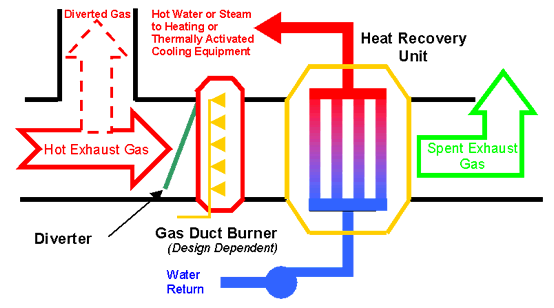

In some co/trigeneration designs, the exhaust gases can be used to activate a thermal wheel or a desiccant dehumidifier. Thermal wheels use the exhaust gas to heat a wheel with a medium that absorbs the heat and then transfers the heat when the wheel is rotated into the incoming airflow.

A professional engineer should be involved in designing and sizing of the waste heat recovery section. For a proper and economical operation, the design of the heat recovery section involves consideration of many related factors, such as the thermal capacity of the exhaust gases, the exhaust flow rate, the sizing and type of heat exchanger, and the desired parameters over a various range of operating conditions of the co/trigeneration system — all of which need to be considered for proper and economical operation.

The Market and Potential for Waste Heat Recovery technologies and solutions

There are more than 500,000 smokestacks in the U.S. that are "wasting" heat, an untapped resource that can be converted to energy with Waste Heat Recovery technologies.

About 10% of these 500,000 smokestacks represent about 75% of the available wasted heat which has a stack gas exit temperature above 500 degrees F. which could generate approximately 50,000 megawatts of electricity annually and an annual market of over $75 billion in gross revenues before tax incentives and greenhouse gas emissions credits.

Waste Heat Recovery technologies represent the least cost solution which provides the greatest return on investment, than any other possible green energy technology or "carbon free energy" opportunity!

For more information on Waste Heat Recovery and Waste Heat Boilers, call/email us.

______________________________________________________

What is Biomethane?

Biomethane is "renewable natural gas" made from organic sources - which starts out as "biogas" but then is cleaned up in a process called "Biogas to Biomethane" which removes the impurities in biogas such as carbon dioxide, siloxanes and hydrogen sulfides (H2S).

Biomethane is soon to be re-classified from the category of "Low Carbon Fuels" to "Super Low Carbon Fuel" due to it being the greenest of all biofuels!

"Cleaned-up" and ready for use in an onsite cogeneration or trigeneration power plant, the Biomethane could also be sold to a pipeline company and completely replace the "natural gas" that is typically transported to markets via the vast underground pipeline system. 

Biomethane will some day replace the "methane" that is sold by natural gas utility companies.

Biomethane has an unlimited supply, whereas the methane sold by gas companies has a limited supply. Biomethane is renewable, whereas the methane sold by your gas utility company is not renewable. Biomethane recovery, use and production generates "Greentags" or a "Renewable Energy Credit" for the owners and is GOOD for our environment.

As previously mentioned, Biomethane is "naturally" produced from organic materials as they decay. 

Sources of Biomethane include; landfills, POTW's/Wastewaster Treatment Systems, and every tree or agricultural product that is no longer living. Biomethane is also generated from animal operations where manure can be collected and the Biomethane is generated from anaerobic digesters where the manure decomposes.

Biomethane, after installation of the Biomethane equipment is essentially free, as opposed to buying natural gas, presently costing around $10.00/mmbtu. 

Methanogenesis is the production of CH4 and CO2 by biological processes that are carried out by methanogens.

Unlike the price of natural gas, which has been very unstable, and wildly fluctuating from $5.50 to as much as $17.00/mmbtu in recent years, Biomethane prices will tend to be more stable over the years. As more and more Biomethane is produced, and produced in reliable and sustainable methods that can fuel our energy needs now and for. 


What is "Net Zero Energy" and a Net Zero Energy Building

Buildings are responsible for approximately 40% of all greenhouse gas emissions (via the energy needed to provide power and energy for them).  We provided consulting services for the first "Net Zero Energy" building in the U.S. in 2002, and now providing consulting services for the first Net Zero Energy community of over 200 homes in Southern California.  Net Zero Energy is now a reality and provides a home or business with all the power and energy needed, with or without connection to the electric grid. That means, not receiving an electric bill or natural gas bill ever month!

The term "Net Zero Energy" (sometimes referred to as "Zero Energy Capable") refers to homes and buildings produces as much power and energy as it uses over the course of a year. Net Zero Energy Buildings (NZEB) are very energy efficient requiring very little power from the grid.  

Do not be confused by the confusing term; "zero energy" or "zero energy building."  EVERY home or building uses energy, or you may as well be in a cave! 

The important considerations are, 

1. How efficient is the home or building? 

2. How much energy does the home or building use, and how efficiently is it used? 

3. How much "carbon free energy" or "pollution free power" is generated by the buildings' own onsite renewable energy system?

4. What are the utility company's prices for the excess power generated and sent to the grid? (see: Net Energy Metering)

5. How difficult is it to interconnect the renewable energy system of the building with the utility company's powerlines/electric grid? 

At the heart of a Net Zero Energy Home/Building is the idea that any home or building can meet its energy requirements from low-cost, locally available, nonpolluting, renewable sources, like Solar Trigeneration
sm Energy Systems. 

Solar Trigeneration
sm Energy Systems are the idea whose time has come, to make Net Zero Energy Buildings sm commonplace.

Solar Trigeneration
sm Energy Systems Provide All of the Cooling, Heating & Power, for Any Size Building, with only the Energy of the Sun. Solar Trigeneration sm Energy Systems Provide Simultaneous Cooling, Heating & Power whether it is 12 Noon, or 12 Midnight, and can do so, WITHOUT Connection to the electric grid!

The Department of Energy developed the Commercial Building Initiative (CBI) and is pursuing the goal of marketable Net Zero Energy Buildings through research and partnerships. 

The DOE's CBI has developed tools and resources to help the commercial buildings industry improve energy efficiency at various levels of energy savings.

* Some of the above information from the Department of Energy, Energy Information Agency and the Renewable Energy Institute.

____________________________________________________

Solar Trigeneration sm
www.SolarTrigeneration.com


We install our Solar Trigenerationsm Energy Systems, for qualified commercial businesses, as well as  cities, schools and government facilities with our Zero Up-front Cost program.

For some customers - based on their present location, utility company and electric rate - we are able to reduce their electric rate by 10%. Even more for other customers.  Solar Trigenerationsm Energy System!

We provide the answers to your questions about solar power and energy!

Does your; business, city, school, or electric utility want a more sustainable solar power and energy solution?

Are you interested in transforming your facility, campus or building(s) to "Net Zero Energy"™ buildings?

Does your city or school have a problem with rising electricity and energy expenses, but not have the financial resources to provide the necessary updates and upgrades to make your buildings more efficient?

Maybe you have already decided to go solar, but you have a lot of questions, and don't know where to start.  Call us, we have the answers to your solar questions.

What is the optimum solar solution?  There are hundreds of companies in the solar power and energy industry.....  Who do you call to help you with these questions to help you make the right decisions?

There's still more questions, that you may not have thought about..... which solar technology do you go with, and what is the return on investment? 

Are there any solar rebates, refunds, tax credits or other incentives available?

What about investors that might be interested in owning/operating and maintaining our solar energy system under a Power Purchase Agreement?

You have numerous questions and need the answers to help in the decision-making process regarding the solar power and energy system you want to install.  These decisions will have a long-lasting impact as the solar energy system that you install at your business or facility will probably be generating clean power for the next 40 to 50 years, if not longer!  So, the decisions that you need to make now regarding your solar energy system will be a decision that will be either a long-term asset or a liability, depending on the equipment you select and who you choose to install it. 

We can help cities, schools and commercial (and large residential) customers make the switch to solar!

And now, with our no up-front cost for our Solar Trigenerationsm Energy System, we can also transform your building(s) to a "Net Zero Energy Building"™ and many times, actually REDUCE your present energy expenses by 10%, and possibly more!

Examples of buildings/facilities where our Solar Trigenerationsm Energy Systems would benefit, include; universities, churches, data centers, shopping centers, schools, radio/television stations, food processing, warehouses, new real estate developments and subdivisions, and electric utilities - practically any commercial facility can be upgraded to one of our "pollution free power" systems featuring one of our solar energy systems,  including our Solar Trigenerationsm system!

Call or email us, we can provide these answers. We are focused on providing the optimum solar energy systems for our clients. This begins with an initial review of your past 12 months energy/electrical bills. The next step would include a site visit which may include a Demand Side Management study and/or a Solar Feasibility Study which determines the optimum solar energy system for your facility or location.  Once the optimum solar solution(s) are determined, we then have a blueprint to proceed that could include our installing one of our Solar Cogeneration™ or Solar Trigenerationsm energy systems.  Or for a city, real estate development or subdivision, or an electric utility, one of our utility scale power plants which might be a Concentrating Photovoltaic, Concentrating Solar Power or High Concentration Photovoltaic power plants.


What is "Net Zero Energysm?"

Net Zero Energysm - when applied to a home or commercial building, simply means that the home or buildings generates as much power and energy as they consume, when measured on a monthly or annual basis, and with an onsite, renewable energy system, such as our Solar Trigenerationsm Energy System. 

What is a Net Zero Energy Buildingsm?

A Net Zero Energy Buildingsm produces as much energy as it uses over the course of a year. Net Zero Energy Buildingssm are very energy efficient. The remaining low energy needs are typically met with on-site renewable energy. 

First of all, understand that there is no such thing as a "zero energy building!" EVERY building uses energy, or you may as well be in a cave!  

The important considerations are, 

1.  How efficient is the building?  

2.  How much energy does the building use, and how efficiently is it used?  

3.  How much "carbon free energy" or "pollution free power" is generated by the buildings' own onsite renewable energy system?

4.  What are the utility company's prices for the excess power generated and sent to the grid? 
(see: Net Energy Metering)

5.  How difficult is it to interconnect the renewable energy system of the building with the utility company's powerlines/electric grid?   

At the heart of a Net Zero Energy Buildingsm is the idea that any building can meet its energy requirements from low-cost, locally available, nonpolluting, renewable sources, like our Solar Trigenerationsm Energy Systems. Our Solar Trigenerationsm Energy Systems are the idea whose time has come, to make Net Zero Energy Buildingssm commonplace.

Solar Trigenerationsm Energy Systems Provide All of the Cooling, Heating & Power, for Any Size Building, with only the Energy of the Sun. Solar Trigenerationsm Energy Systems Provide Simultaneous  Cooling, Heating & Power whether it is 12 Noon, or 12 Midnight,  and can do so, WITHOUT Connection to the electric grid!

The Diagram Below Shows How Our Solar Trigenerationsm Energy System Works, 
for Heating and Cooling a Building (next to the Solar Thermal Collectors, are the PV Panels, that generate the Electricity).


Our Solar Trigenerationsm Energy System
provides "Cooling, Heating & Power" for your business,
or home with the free energy of the sun!


What is Net Energy Metering?

Net energy metering is used to measure a customer's total electric consumption against that customer's total on-site electric generation.  When a customer's onsite generation of power exceeds the amount that they use, the customer's solar energy system (or other renewable energy system) exports the extra electricity to the grid.  When the power requirements of the customer exceeds their onsite generation of power, the customer imports the electricity they need from electric grid. The customer pays the electric company for any extra power they use over the amount they generate - OR -  the customer receives a credit or refund from the electric company if they exported more power to the grid, than what they consumed.  

Renewable Energy Is Necessary for Net Zero Energy Buildings

Much focus is placed on energy efficiency as the most cost-effective way to reduce energy use in commercial buildings. However, consumption can be reduced only so much. There is a point at which the cost of adding efficiency measures is higher than that of using renewable energy such as thin film photovoltaics and other solar energy systems

Aggressive energy efficiency strategies can reduce a building's energy consumption by 50% to 70%. Renewable energy technologies must be used to reach the goal of a net-zero energy building (NZEB).

Supply-Side Technologies

Various supply-side renewable energy technologies are available for Net Zero Energy Buildings. Supply-side technologies, often called energy producers, collect natural energy and transform it into a useful form. Examples of these technologies include PV, solar hot water, wind, hydroelectric, and biofuels.

Ranking of Energy Options

All renewable sources are favorable over conventional energy sources such as coal and natural gas; however, the U.S. Department of Energy recommends the following ranking for these options (the lower numbers are preferable):


Option Number

NZEB Supply-Side Options

Examples

0

Reduce site energy use through low-energy building technologies

Daylighting, high-efficiency heating, ventilation, and air-conditioning equipment (HVAC), natural ventilation, evaporative cooling

On-Site Supply Options

1

Use renewable energy sources available within the building's footprint

PV, solar hot water, and wind located on the building

2

Use renewable energy sources available at the site

PV, solar hot water, low-impact hydroelectric, and wind located on-site, but not on the building

Off-Site Supply Options

3

Use renewable energy sources available off site to generate energy on site

Biomass, wood pellets, ethanol, or biodiesel that can be imported from off site; waste streams from on-site processes that can be used on-site to generate electricity and heat

4

Purchase off-site renewable energy sources

Utility-based wind, PV, emissions credits, or other "green" purchasing options; hydroelectric is sometimes considered


This hierarchy is weighted toward renewable technologies within the building footprint and site. Rooftop PV and solar water heating are the most applicable supply-side technologies for Net Zero Energy Buildings. Other supply-side technologies such as parking lot-based wind or solar energy systems may be available.

The goal in developing the ranking was to encourage technologies that:


Solar Trigeneration sm
www.SolarTrigeneration.com

Now, Your Business Can Have Our Solar Trigeneration™ 
Energy System, installed for
No Up-Front Costs!

Through an affiliated partner company, we are now installing our Solar Trigeneration Energy Systems, for qualified commercial businesses, nationwide, with Zero up-front costs.

Some customers may even see a decrease in their energy expenses by as much as 10% to 20% with our Zero up-front cost Solar Trigeneration Energy System!

To qualify for our no up-front cost Solar Trigeneration Energy Systems, businesses must:

We expect ALL of our customers will be very happy knowing that the clean, green, renewable power they are using is: 


Solar Trigenerationsm is Here!
Solar Trigeneration Provides (almost) Any Building - with all of its
Cooling, Heating & Power  Requirements. 
Solar Trigenerationsm 
is also the Greenest Way to  Cool, Heat and Power your Facility - 
whether that's a Hospital, Data Center, Office Building or University Campus


Commercial, Industrial & Utility Customers:
Reduce or COMPLETELY ELIMINATE
Your Electric Power & Natural Gas Expenses!

Stop Paying High Utility Bills to the Electric and Natural Gas Companies!  

Let us Show You How You Can 
"
Cut the Cord" to the Electric Company!

Our "Solar Trigenerationsm" Power and Energy Systems
Generate
Carbon Free Energy and Pollution Free Power
Which is Sustainable, Clean, Renewable and Affordable

Solar Energy Systems provides cooler, cleaner, greener power and energy project development services.  Our Solar Energy Systems are an environmentally-friendly and economically-superior choice to expensive natural gas and electricity. Additionally, our renewable energy technologies generate "green tags" or a Renewable Energy Credit.  

We provide Solar Power and Energy systems that we refer to as "EcoGeneration" solutions that produce cooler, cleaner, greener power and energy for our customers and our environment. Unlike most companies, we are equipment supplier/vendor neutral. This means we help our clients select the best equipment for their specific application. This approach provides our customers with superior performance, decreased operating expenses and increased return on investment. 

Our company provides turn-key project solutions that include all or part of the following: 


Net Zero Energy Building sm
www.NetZeroEnergyBuilding.com

The Audubon Nature Center Installs Solar Trigeneration  System
Making this one of the World's First
"Net Zero Energy Buildings"
at Their New Facility in Los Angeles, California

GRID-FREE SOLAR ENERGY SYSTEM....
NO CONNECTION TO THE ELECTRIC UTILITY!

The Solar Trigeneration  Provides All of their Facility's (5000 sq.ft.)
Cooling, Heating and Power Requirements - at 12 noon or 12 midnite,
WITHOUT ANY CONNECTION to the Electric Utility
with our Solar Trigeneration Energy System!  


The Sun Powers the Audubon Nature Center's Solar Trigeneration  
System at Debs Park in Los Angeles. The Audubon Nature Center's 
building is one of the world's first "Net Zero Energy Buildings." 
The Solar Trigeneration System Consists of a 10 Ton "Solar 
Absorption Cooling
" System Matched with a Solar Electric 
Power System
and a Solar Water Heating System


By:  Monty Goodell, MBA
www.SolarTrigeneration.com

Los Angeles, California

There is now a better, more efficient, “pollution free power” and "carbon free energy" solution for cooling, heating and powering homes and commercial buildings where solar energy is available. It's called Solar Trigeneration.

Solar Trigeneration is defined as the simultaneous generation of cooling, heating and power with only the free solar energy from the sun providing the "fuel". 

Solar Trigeneration is now a reality at the Audubon Center at Debs Park several miles from downtown Los Angeles and is one of the world's first "Net Zero Energy Buildings." Net Zero Energy Buildings." Net Zero Energy Buildings."

The Audubon Nature Center is totally powered by the sun’s energy and our Solar Trigeneration energy system!

The 5,300 square foot building operates entirely “grid-free” and without any electric connections to the electric grid, or natural gas connections – a truly sustainable power and energy solution. 

Best of all, the Audubon Center doesn’t rely on the over-burdened electric grid or even natural gas.  Therefore, the Audubon Nature Center NEVER receives an electric bill or natural gas bill.... ever!

The Audubon Nature Center's 5,000 square foot office and conference facility is powered by a Solar Trigeneration system that features a 25-kilowatt solar electric power system where the energy is stored in a bank of batteries. The Center is cooled by a 10-ton solar absorption cooling system powered by an array of very efficient solar heat pipe vacuum tube thermal collectors.  The collectors heat the water to temperatures of 200+ degree F stored in a 1,200 gallon insulated tank, another type of inexpensive battery. The Solar Trigeneration system at the Audubon not only provides the air-conditioning in the summer but also heats the building in the winter, and provides the hot water for the kitchen and bathrooms. 

Absorption chillers, and cooling with solar energy with an absorption chiller are not new technologies.  In fact, absorption chiller technology is over 70 years old.  The first refrigerators were powered by propane gas to run the absorption chillers that used ammonia as a refrigerant.  Electricity and the electric compression chiller gained popularity only because of the convenient “plug and play” appliance and relatively cheap electric rates.  Electricity is no longer economically, or environmentally “cheap.”

History of Cogeneration and Trigeneration

Few people realize that the world's first commercial power plant, designed and built by Thomas Edison, was a cogeneration power plant that was first opened on Pearl Street, in Lower Manhattan, New York.  That was in 1882!  Edison not only generated, and sold electricity in the several blocks surrounding his "Pearl Street Station" but he also sold the hot water that was also generated from the cogeneration plant. The fuel Edison used for generating the electricity and hot water (cogeneration) came from "pulverized coal." The Pearl Street Station provided 110 volts of "direct current" power to 59 customers in lower Manhattan, around his Pearl Street laboratory. 

Cogeneration is the simultaneous production of heat and power. 

Trigeneration is the simultaneous production of cooling, heating and power.

Our company, in partnership with the Renewable Energy Institute and our affiliated partners, have perfected "Solar Cogeneration" and "Solar Trigeneration" which are the "heart" of our Net Zero Energy Buildings.

Unlike traditional cogeneration and trigeneration power plants that are fueled by natural gas - and Thomas Edison's cogeneration plant, which was fueled with pulverized coal, our Solar Cogeneration and Solar Trigeneration energy systems are fueled with the energy of the sun!  And, while natural gas is a "cleaner" fuel, it still has its problems in that it is a limited resource and generates greenhouse gas emissions.  Natural gas also have had extreme price swings and has a history of price volatility.  Natural gas prices have gone from a high of $17.00/mmbtu to a recent low of under $3.00/mmbtu.  

Regarding pulverized coal, yes, it's cheap in terms of the cost of generating electricity, but too many people forget about the "externalities" of pulverized coal that is not reflected in the "cheap" costs of generating electricity from pulverized coal.  These costs not accounted for are the huge environmental cost relating to the use of pulverized coal.  Pound for pound, pulverized coal and coal fired power plants generate more greenhouse gas emissions than any other fossil fuel.  There are also the costs related to the health and safety issues of the miners that mine the coal.  And, the costs to the environment in terms of the ever-increasing amounts of mercury that are "dumped" into the environment from coal fired power plants, is also not reflected in the "cheap" price of generating power from pulverized coal.

Unlike the problems inherently found with the use of fossil fuels, Solar Cogeneration and Solar Trigeneration have no such problems. 

And talk about "cheap" costs of generating power and energy, there is nothing cheaper than free!!!!  

The owners of the Audubon Nature Center never receive any monthly natural gas or electric bills!

And the owners of the Audubon Nature Center will never have to account for their greenhouse gas emissions, or comply with the ever-increasing regulations related to greenhouse gas emissions and the pending Cap and Trade laws..... thanks to our  Solar Trigeneration energy system!

Solar Trigeneration is an EcoGeneration solution.  EcoGeneration refers to a power and energy system that uses the “natural” energy or fuel that is available for a specific site or location. Such energy or fuel includes, solar, wind, BioMethane, geothermal, and ocean power, including ocean tidal and ocean thermal energy conversion. For example, in the desert areas of the Southwestern U.S. , there is an abundance of solar energy. Therefore, home-owners and business owners in this part of the country should seriously consider an EcoGeneration system (“ecogen system”) that optimizes the opportunities available through solar energy

Today, the cause of the summer peak electric demand, electric supply problems, and black-outs, are the result of the energy crisis in California, primarily attributed to the air conditioning load. Over 40 percent of the electricity generated every day goes is used for air conditioning.  At this time of year, the electric utilities are forced to turn on all of their power plants to generate the “peak” demands required by the customers, primarily for air-conditioning.  This means that all of the efficient power plants, the inefficient power plants, along with all of the “peaking” power plants have to run to generate the electricity needed. The high cost of meeting the peak demand is passed on to the consumers with rates of $.20+ per kWh during the summer months. For fixed income seniors living in desert communities, they are already forced to conserve on energy, food, water, and other necessities of life. 

Greater Demands on California’s Limited Electric Supply, Lack of New Electric Power Supplies, and This Summer’s Heat Wave are Compounding the Problem Leading to the “Perfect Electric Storm”

Many people will remember the movie “The Perfect Storm” from several years ago, when several storms came together in the northeastern part of the U.S. to produce a deadly and catastrophic “perfect” storm. Today, a different type of “perfect storm” is brewing in California. The storm that’s looming on the horizon in California is a “perfect electric storm” wherein the supply of electricity from the electric utility company’s power plants are unable to keep-up with the demand – meaning a black-out, or loss of electricity, like the black-outs from previous years, and like the northeastern black-out from 2003.

The most likely time of year for a black-out in California, unfortunately, is the summer, when air-conditioners are running at the maximum, and placing the maximum load on California’s electricity supply.  Should such a black-out occur in the desert areas of California, where daily high temperatures routinely reach 110 degrees and higher, and where a significant percentage of the population is comprised of retired and senior citizens, and should the black-out be prolonged, a number of deaths will be the likely outcome. People, and especially the elderly, simply cannot tolerate prolonged high temperatures

How Do We Prevent the “Perfect Electric Storm” from Occurring in California and Other Regions in the U.S.?

Another major concern is how do we prevent the “Perfect Electric Storm” from happening, like the Northeast Blackout several summers ago, especially for people living in the desert?  California’s energy authorities are warning of a possible energy crisis during the hot summer months, due to the excessive and prolonged summer temperatures where demand increases by over 40 percent.  Compounding the problem is the rising demand for electricity due to population growth and the limited transmission capacity in some areas in the region.  According to the California Energy Commission, the State must build three natural gas-fired 500-megawatt peaking power plants, every year, just to keep up with the growing demands of electricity. Failure to keep up with demand means The problem is getting worse due to the population growth in the Inland Empire , Coachella Valley and Antelope Valley. The projected power gap for the coming summers remains bleak.

Governor Schwarzenegger’s “Million Solar Roofs” program and the passage of the 2005 Federal Energy Act will be the foundation to create a “Perfect Solar Storm” to trigger the Solar Economy throughout California. 

With the threat of California’s seniors and elderly dying from heat exhaustion due to power outages, black-outs, rolling black-outs and the rising costs of electricity and natural gas, combined with the continuing impact of global warming, the perfect solution is to create a Solar Revolution by cooling, heating and powering the desert with solar energy and technologies like Solar Cogeneration or Solar Trigeneration.

For more information about Solar Energy Systems, such as Solar Cogeneration or Solar Trigeneration, call/email the Renewable Energy Institute.

100%

The Audubon Center's new Solar Trigeneration power and energy system
makes this building a "Net Zero Energy Building"


100%
The Audubon's Roof showing the Solar Thermal Collectors, part of the 
Solar Trigeneration power and energy system


100%

The heart of the Audubon's Solar Trigeneration power and energy system
provides "free heating, cooling and domestic hot water," a "net zero energy building."


100%

The hot water from the Solar Thermal Collectors on the roof of the Audubon is pumped here for producing 
the building's heating, cooling and domestic hot water. Hot water is stored in the tank on the left for overnight.

________________________________________________________

Absorption Chillers 
&
Adsorption Chillers

For Solar Trigeneration Applications


What Absorption Chillers and How Does They Work?

Absorption chillers use heat instead of mechanical energy to provide cooling. A thermal compressor consists of an absorber, a generator, a pump, and a throttling device, and replaces the mechanical vapor compressor.


In the chiller, refrigerant vapor from the evaporator is absorbed by a solution mixture in the absorber. This solution is then pumped to the generator. There the refrigerant re-vaporizes using a waste steam heat source. The refrigerant-depleted solution then returns to the absorber via a throttling device. The two most common refrigerant/ absorbent mixtures used in absorption chillers are water/lithium bromide and ammonia/water.


Compared with mechanical chillers, absorption chillers have a low coefficient of performance (COP = chiller load/heat input). However, absorption chillers can substantially reduce operating costs because they are powered by low-grade waste heat. Vapor compression chillers, by contrast, must be motor- or engine-driven.


Low-pressure, steam-driven absorption chillers are available in capacities ranging from 100 to 1,500 tons. Absorption chillers come in two commercially available designs: single-effect and double-effect. Single-effect machines provide a thermal COP of 0.7 and require about 18 pounds of 15-pound-per-square-inch-gauge (psig) steam per ton-hour of cooling. Double-effect machines are about 40% more efficient, but require a higher grade of thermal input, using about 10 pounds of 100- to 150-psig steam per ton-hour.


In single-effect absorption chillers, all condensing heat cools and condenses in the condenser. From there it is released to the cooling water. A double-effect machine adopts a higher heat efficiency of condensation and divides the generator into a high-temperature and a low-temperature generator.


Actions You Can Take

Determine the cost-effectiveness of displacing a portion of your cooling load with a waste steam absorption chiller by taking the following steps:

Absorption Chillers Refrigeration Cycle

The basic cooling cycle is the same for the absorption and electric chillers. Both systems use a low-temperature liquid refrigerant that absorbs heat from the water to be cooled and converts to a vapor phase (in the evaporator section). The refrigerant vapors are then compressed to a higher pressure (by a compressor or a generator), converted back into a liquid by rejecting heat to the external surroundings (in the condenser section), and then expanded to a low- pressure mixture of liquid and vapor (in the expander section) that goes back to the evaporator section and the cycle is repeated.

The basic difference between the electric chillers and absorption chillers is that an electric chiller uses an electric motor for operating a compressor used for raising the pressure of refrigerant vapors and absorption chillers use the heat for compressing refrigerant vapors to a high-pressure. The rejected heat from the power-generation equipment (e.g. turbines, microturbines, and engines) may be used with an absorption chiller to provide the cooling in a CHP system.

The basic absorption cycle employs two fluids, the absorbate or refrigerant, and the absorbent. The most commonly fluids are water as the refrigerant and lithium bromide as the absorbent. These fluids are separated and recombined in the absorption cycle. In the absorption cycle the low-pressure refrigerant vapor is absorbed into the absorbent releasing a large amount of heat. The liquid refrigerant/absorbent solution is pumped to a high-operating pressure generator using significantly less electricity than that for compressing the refrigerant for an electric chiller. Heat is added at the high-pressure generator from a gas burner, steam, hot water or hot gases. The added heat causes the refrigerant to desorb from the absorbent and vaporize. The vapors flow to a condenser, where heat is rejected and condense to a high-pressure liquid. The liquid is then throttled though an expansion valve to the lower pressure in the evaporator where it evaporates by absorbing heat and provides useful cooling. The remaining liquid absorbent, in the generator passes through a valve, where its pressure is reduced, and then is recombined with the low-pressure refrigerant vapors returning from the evaporator so the cycle can be repeated.

Absorption chillers are used to generate cold water (44°F) that is circulated to air handlers in the distribution system for air conditioning.

"Indirect-fired" absorption chillers use steam, hot water or hot gases steam from a boiler, turbine or engine generator, or fuel cell as their primary power input. Theses chillers can be well suited for integration into a CHP system for buildings by utilizing the rejected heat from the electric generation process, thereby providing high operating efficiencies through use of otherwise wasted energy.

"Direct-fired" systems contain natural gas burners; rejected heat from these chillers can be used to regenerate desiccant dehumidifiers or provide hot water.

Commercially, absorption chillers can be single-effect or multiple-effect. The above schematic refers to a single-effect absorption chiller. Multiple-effect absorption chillers are more efficient and discussed below.

Multiple-Effect Absorption Chillers

In single-effect absorption chillers, the heat released during the chemical process of absorbing refrigerant vapor into the liquid stream, rich in absorbent, is rejected to the environment. In a multiple-effect absorption chiller, some of this energy is used as the driving force to generate more refrigerant vapor. The more vapor generated per unit of heat or fuel input, the greater the cooling capacity and the higher the overall operating efficiency.

Double-effect absorption chillers uses two generators paired with a single condenser, absorber, and evaporator. It requires a higher temperature heat input to operate and therefore they are limited in the type of electrical generation equipment they can be paired with when used in a CHP System.

Triple-effect absorption chillers can achieve even higher efficiencies than the double-effect chillers. These absorption chillers require still higher elevated operating temperatures that can limit choices in materials and refrigerant/absorbent pairs. Triple-effect chillers are under development by manufacturers working in cooperation with the U.S. Department of Energy.

_______________________________________________________________________

What is Polycrystalline Silicon?

Polycrystalline silicon, also referred to as "semicrystalline silicon," "polysilicon," "poly-Si," or just "poly," is a material consisting of small silicon crystals. Polycrystalline silicon cells are recognized by their visible grain known as the “metal flake effect.”

Semiconductor grade as well as "solar grade" polycrystalline silicon is converted to "single crystal" silicon - meaning that the randomly associated crystallites of silicon in "polycrystalline silicon" are converted to a large "single" crystal.  Single crystal silicon is used to manufacture most Si-based microelectronic devices. Polycrystalline silicon can be as high in purity as 99.9999%.


What are Thin Film Photovoltaics?

Without a doubt, the most exciting technology in the solar power industry is "Thin Film Photovoltaics."  Thin Film Photovoltaics technology represents the next big thing in renewable energy and solar power as it integrates nanotechnologies into the production of solar photovoltaics. 

According to the Department of Energy, the recent technological advances in thin film photovoltaics make this a very exciting time to be in the solar energy industry.  These advances have led to many new developments in the components and manufacturing of thin film photovoltaics. This has made thin film photovoltaics cheaper to manufacture as they are also now easier to install since they are extremely versatile, flexible, bendable, and much lighter.

Thin film photovoltaics  have led many to believe that as much as 50% of our nation's future power will be generated by "power buildings" that integrate "building integrated photovoltaics" or "BIPV" into the building's skin or exterior surfaces, that convert sunlight into "pollution free power" for use in the building.  This also designates these buildings (and homes) as "Net Zero Energy Buildings" and make the option for going grid-free, or not connecting to the grid, a real possibility.

According to the Department of Energy, the market potential for printed electronics will grow into a $47 billion market by 2018.  Thin film photovoltaics represents a significant portion of this market - and based on this heavily researched solar technology, thin film photovoltaics now represents a $20 billion/year industry in the U.S.

The solar PV panels produced under the thin film photovoltaics umbrella have the potential to produce power significantly cheaper power than today’s typical silicon-based PV panels.  The panels are usually made in the form of a monolithic piece of glass, upon which various thin films are deposited, although a number of firms are working on depositing the materials on a substrate, such as stainless steel or plastic.

________________________________________________________


Solar Electric Power Systems
www.SolarElectricPowerSystems.com


Solar electric power systems transform sunlight into electricity. Sunlight is an abundant resource. Every minute the sun bathes the Earth in as much energy as the world consumes in an entire year.

Solar cells employ special materials called semiconductors that create electricity when exposed to light. Solar electric systems are quiet and easy to use, and they require no fuel other than sunlight. Because they contain no moving parts, they are durable, reliable, and easy to maintain.

How It Works

Solar cells, also known as photovoltaic (PV) cells, do the work of making electricity. Several types of solar electric technology are under development, but four—crystalline silicon (a form of refined beach sand), thin films, concentrators, and thermophotovoltaics—are illustrative of the range of technologies. Solar cells are connected to a variety of other components to make a solar electric power system.

Crystalline Silicon

Crystalline silicon solar cells are used in more than half of all solar electric devices. Like most semiconductor devices, they include a positive layer (on the bottom) and a negative layer (on the top) that create an electrical field inside the cell. When a photon of light strikes a semiconductor, it releases electrons (see animation). The free electrons flow through the solar cell's bottom layer to a connecting wire as direct current (DC) electricity.

Some solar cells are made from polycrystalline silicon, which consists of several small silicon crystals. Polycrystalline silicon solar cells are cheaper to produce but somewhat less efficient than single-crystal silicon.

A simple silicon solar cell can power a watch or calculator. However, it produces only a tiny amount of electricity. Connected together, solar cells form modules that can generate substantial amounts of power. Modules are the building blocks of solar electric systems, which can produce enough power for a house, a rural medical clinic, or an entire village. Large arrays of solar electric modules can power satellites or provide electricity for utilities.

Solar Electric Power System Components

In addition to modules, several components are needed to complete a solar electric power system.

Many systems include batteries, battery chargers, a backup generator, and a controller so that people in solar-powered homes and buildings can turn on the lights at night or run televisions or appliances on cloudy days. Grid-connected systems don't require batteries or backup generators because they use the grid for backup power. Some remote system applications, such as those used to pump water, do not require a backup power source.

Diagram showing how solar modules can be connected to a DC-AC inverter, battery bank, and a backup generator to provide a continuous source of power in stand-alone applications.

Components of a typical standalone PV system using crystalline silicon technology. (Source: Solar Electric Power Association)

Solar electric power systems can incorporate inverters or power control units to transform the DC electricity produced by the solar cells into alternating current (AC) to run AC appliances or sell to a utility grid. Complete systems usually include safety disconnects, fuses, and a grounding circuit as well.

Thin Films

Solar electric thin films are lighter, more resilient, and easier to manufacture than crystalline silicon modules. The best-developed thin-film technology uses amorphous silicon, in which the atoms are not arranged in any particular order as they would be in a crystal. An amorphous silicon film only one micron thick can absorb 90% of the usable solar energy falling on it. Other thin-film materials include cadmium telluride and copper indium diselenide. Substantial cost savings are possible with this technology because thin films require relatively little semiconductor materials.

Thin films are produced as large, complete modules, not as individual cells that must be mounted in frames and wired together. They are manufactured by applying extremely thin layers of semiconductor material to a low-cost backing such as glass or plastic. Electrical contacts, antireflective coatings, and protective layers are also applied directly to the backing material. Thin films conform to the shape of the backing, a feature that allows them to be used in such innovative products as flexible solar electric roofing shingles.

Concentrators

Concentrators use optical lenses (similar to plastic magnifying glasses) or mirrors to concentrate the sunlight that falls on a solar cell. With a concentrator to magnify the light intensity, the solar cell produces more electricity. Today, most solar cells in concentrators are made from crystalline silicon. However, materials such as gallium arsenide and gallium indium phosphide are more efficient than silicon in solar electric concentrators and will likely see more use in the future. These materials are now used in communications satellites and other space applications.

Concentrators produce more electricity using less of the expensive semiconductor material than other solar electric systems. A basic concentrator unit consists of a lens to focus the light, a solar cell assembly, a housing element, a secondary concentrator to reflect off-center light rays onto the cell, a mechanism to dissipate excess heat, and various contacts and adhesives. The basic unit can be combined into modules of varying sizes and shapes. Concentrators only work with direct sunlight and operate most effectively in sunny, dry climates. They must be used with tracking systems to keep them pointed toward the sun.

Thermophotovoltaics

Thermophotovoltaic (TPV) devices convert heat into electricity in much the same way that other PV devices convert light into electricity. The difference is that TPV technology uses semiconductors "tuned" to the longer-wavelength, invisible infrared radiation emitted by warm objects. This technology is cleaner, quieter, and simpler than conventional power generation using steam turbines and generators.

TPV converters are relatively maintenance-free because they contain no moving parts. In addition to using solar energy, they can convert heat from any high-temperature heat source, including combustion of a fuel such as natural gas or propane, into electricity. TPV converters produce virtually no carbon monoxide and few emissions. They may be used in the future in gas furnaces that generate their own electricity for self-ignition (during power outages) and in portable generators and battery chargers.

Advantages

Solar electric systems offer many advantages. Standalone systems can eliminate the need to build expensive new power lines to remote locations. For rural and remote applications, solar electricity can cost less than any other means of producing electricity. Solar electric systems can also connect to existing power lines to boost electricity output during times of high demand such as on hot, sunny days when air conditioners are on.

Solar electric systems are flexible. Solar electric modules can stand on the ground or be mounted on rooftops. They can also be built into glass skylights and walls. They can be made to look like roof shingles and can even come equipped with devices to turn their DC output into the same AC utilities deliver to wall sockets. These advances mean individual homeowners and businesses can relieve pressure on local utilities struggling to meet the increasing demand for electricity.

More than 30 states offer grid-connected solar electric system owners the chance to save money on their energy bills by feeding any excess power their solar electric system produces into the utility grid—an arrangement called net metering.

Solar power systems require minimal maintenance. They run quietly and efficiently without polluting. They are easy to combine with other types of electric generators such as wind, hydro, or natural gas turbines. They can charge batteries to make solar electricity continuously available.

For utilities, large-scale solar electric power plants can help meet demand for new power generation, especially in distributed applications. A solar electric power plant is created from multiple arrays that are interconnected electronically. Solar electric plants are easier to site and are quicker to build than conventional power plants. They are also easy to expand incrementally—by adding more modules—as power demand increases.

Solar electric power systems are good for the environment. When solar electric technologies displace fossil fuels for pumping water, lighting homes, or running appliances, they reduce the greenhouse gases and pollutants emitted into the atmosphere. The use of solar electric systems is particularly important in developing nations because it can help avert the expected increases in emissions of greenhouse gases caused by the growing demand for electricity in those countries.

Solar electric technologes also benefit the U.S. economy by creating jobs in U.S. companies. Exporting solar electric technologies to developing nations expands U.S. markets while protecting the global environment.

Disadvantages

Although solar electric systems make financial sense in remote areas that lack access to power lines, they are usually more expensive than fossil fuels for grid-connected applications.

This disadvantage is significant for utilities considering large-scale solar electric power plants. Although solar electricity costs considerably more than electricity generated by conventional plants, regulatory agencies often require utilities to supply electricity for the lowest cash cost.

Utilities view solar electric power plants differently than they view conventional power plants. Solar electric modules produce electricity intermittently—only when the sun shines. Their output varies with the weather and disappears altogether at night. Integrating solar electricity into a utility system requires creative planning.

Applications

Aerial photo showing solar electric arrays and solar hot-water systems installed on the roof of the Georgia Tech University Aquatic Center.

A combination of solar electric arrays and pool-heating solar collectors were used to provide power and heat to the Georgia Tech University Aquatic Center, site of the 1996 Olympic swimming competition. (Credit: Heliocol)

Solar electricity has powered satellites since the dawn of the space program. It has run remote communications outposts high in the mountains and turned on the lights, kept medicines cold, and pumped water in rural areas for more than 30 years. Small solar cells are used to power wristwatches, calculators, and other electronic gadgets. More recently, solar electric systems have been used to provide supplemental power to homes and commercial buildings in cities.

Solar electric technology has important roles to play in both the developing and developed worlds. From the farmer irrigating his crops in rural Mexico to an innovative lighting system for an Olympic sports arena, solar electric solutions abound.

Electric utilities harness solar electricity for distributed applications—near substations or at the end of overloaded power lines, for example, to avoid or defer costly line upgrades. They use solar electricity during hot, sunny periods when the demand for air conditioning stretches conventional power generation to its limit. The Sacramento Municipal Utility District, for example, uses large solar electric arrays as part of its power generation mix. Utilities also rely on solar electricity to power remote, standalone monitoring systems.

Consumers and builders are integrating solar electric modules into their homes and offices. Innovative solar electric technologies can replace conventional roofing and facade materials in new buildings. Solar electric roofing shingles, for example, are being used in some new residences. In grid-connected applications, solar electricity supplies some of a consumer's energy needs; the local utility provides the rest.

Standalone solar electric systems power a variety of applications far from the reaches of the power grid. These applications include remote communications systems such as television and radio transmitters and receivers, telephone systems, and microwave repeaters. Standalone solar electric power is also used to prevent corrosion of metal pipes, tanks, bridges, and buildings.

Many remote residences worldwide use solar electricity as their source of power. For instance, more than 100,000 vacation homes in Scandinavia rely solely on solar electric technology to run lights and appliances.

Villages around the world are building solar electric systems to bring electricity to their homes and local industries, often for the first time. To make the maximum use of available resources, village power is typically produced by a hybrid power system that combines solar electricity with diesel backup generators and sometimes another renewable energy technology such wind power. Villages also use standalone solar electric systems for pumping water—an application shared by rural farmers and ranchers in the United States.


What are Plug-in Electric Vehicles?

Plug-in Electric Vehicles or "PEVs" are vehicles (cars, trucks, motorcycles, buses, etc.) that are "fueled" (more correctly referred to as "powered") with electricity that comes from the electric grid or electricity generated on-site from solar PV panels.  See  www.DistributedPV.com  or  www.RooftopPV.com  for more information.


Plug-in Electric Vehicles
come in two basic forms;


Plug In Electric Vehicles
have no:


Plug In Electric Vehicles have ZERO EMISSIONS!

Plug-in Electric Vehicles never need;  tune-ups, oil changes, transmission repairs or engine replacements!

There's Only One Simple System at the "heart" of every electric vehicle, battery electric vehicle, plug-in electric vehicle and plug-in hybrid electric vehicle - which is the "electric drive system."  The electric drive system  takes the place of all of the items above, and outside of the batteries, can last 25 to 30 years or over 1 million miles, and without any 

Some Plug In Electric Vehicles Now Have Ranges Exceeding 300 Miles on One Charge!

Different models from various manufacturers of
Plug-in Electric Vehicles have different ranges. 

Some Plug-in Electric Vehicles can travel only about 40 miles on battery/electric power before the need to switch to the gasoline engine. 

New Plug In Electric Vehicles are capable of traveling > 300 miles before their batteries need to be re-charged using only about $3.00 worth of electricity!

PEVs will cost about 2.5 cents of electricity per mile with PEV's requiring 4 miles per kilowatt-hour and electricity prices of $0.10/kWh

Compare the cost of driving 300 miles in a Plug In Electric Vehicle to a gasoline-powered car:

A gasoline-powered car that gets 20 miles-per-gallon at $3.00/gallon for gasoline, would require 15 gallons of gasoline to travel 300 miles - which equals $45.00.

The same 300 mile trip in a PEV requires only $3.00 for electricity!  

$45.00 for gasoline  versus  $3.00 for electricity 

There is no comparison!

Plug In Electric Vehicles are Now a Viable Alternative

The Department of Transportation has determined that approximately 80% of commuters travel less than 40 miles to and from work each day.  With Plug In Electric Vehicles now exceeding 100 miles on a single charge, PEVs are now a viable alternative for people commuting up to 100 miles to and from work each day.

Multiple Benefits, Advantages and Reasons for Switching to Plug In Electric Vehicles!

Plug-In electric charging stations are being deployed rapidly across the USA.  You will soon be able to "fill-up" whether you go to work, park downtown on the public streets or even at the supermarket!  Eventually, gas stations will offer the option to "fill-up" with electricity as they will have a quick-charge "fill-up" capability from their own Rooftop PV solar power plant!


What is "
Decentralized Energy"?

Decentralized Energy is the opposite of "centralized energy."  Decentralized Energy energy generates the power and energy that a residential, commercial or industrial customer needs, onsite. Examples of decentralized energy production are solar energy systems and solar trigeneration energy systems.

Today's electric utility industry was "born" in the 1930's, when fossil fuel prices were cheap, and the cost of wheeling the electricity via transmission power lines, was also cheap.  "Central" power plants could be located hundreds of miles from the load centers, or cities, where the electricity was needed. These extreme inefficiencies and cheap fossil fuel prices have added a considerable economic and environmental burden to the consumers and the planet.

Centralized energy is found in the form of electric utility companies that generate power from "central" power plants. Central power plants are highly inefficient, averaging only 33% net system efficiency.  This means that the power coming to your home or business - including the line losses and transmission inefficiencies of moving the power - has lost 75% to as much as 80% energy it started with at the "central" power plant.  These losses and inefficiencies translate into significantly increased energy expenses by the residential and commercial consumers.

Decentralized Energy is the Best Way to Generate Clean and Green Energy! 

How we make and distribute electricity is changing! 

The electric power generation, transmission and distribution system (the electric "grid") is changing and evolving from the electric grid of the 19th and 20th centuries, which was inefficient, highly-polluting, very expensive and “dumb.”  

The "old" way of generating and distributing energy resembles this slide:
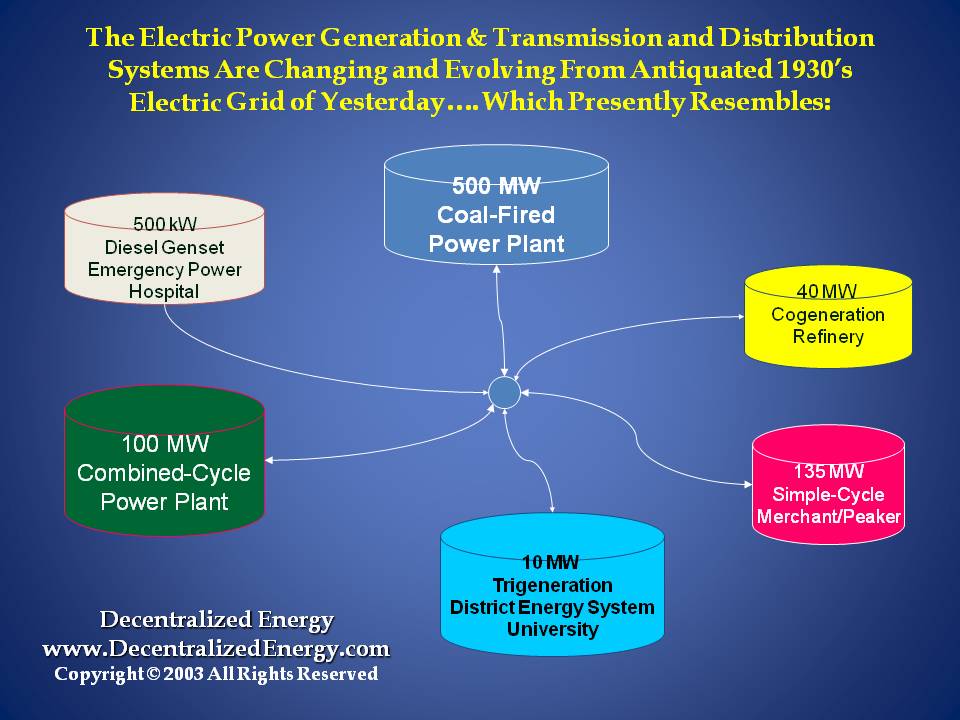
The electric grid of the 21st century (see slide below) will be Decentralized, Smart, Efficient and provide "carbon free energy" and “pollution free power” to customers who remain on the electric grid.  The electric grid of the future will be comprised of both Onsite Power Generation plants and "utility scale power plants" that are fueled/powered with Biomass Gasification, Biomethane, Concentrating Solar Power, B100 Biodiesel, Distributed PV, EcoGeneration Systems, Geothermal Power Plants, Synthesis Gas, Rooftop PV, Solar Cogeneration, Solar Energy Systems, Solar Power Parks, Solar Trigeneration and Wind Power Generation  - located at Residential, Commercial, Industrial and City/Municipal Locations. 

Some customers will choose to dis-connect from the grid entirely.  (Electric grid represented by the small light blue circles in the slide below.)
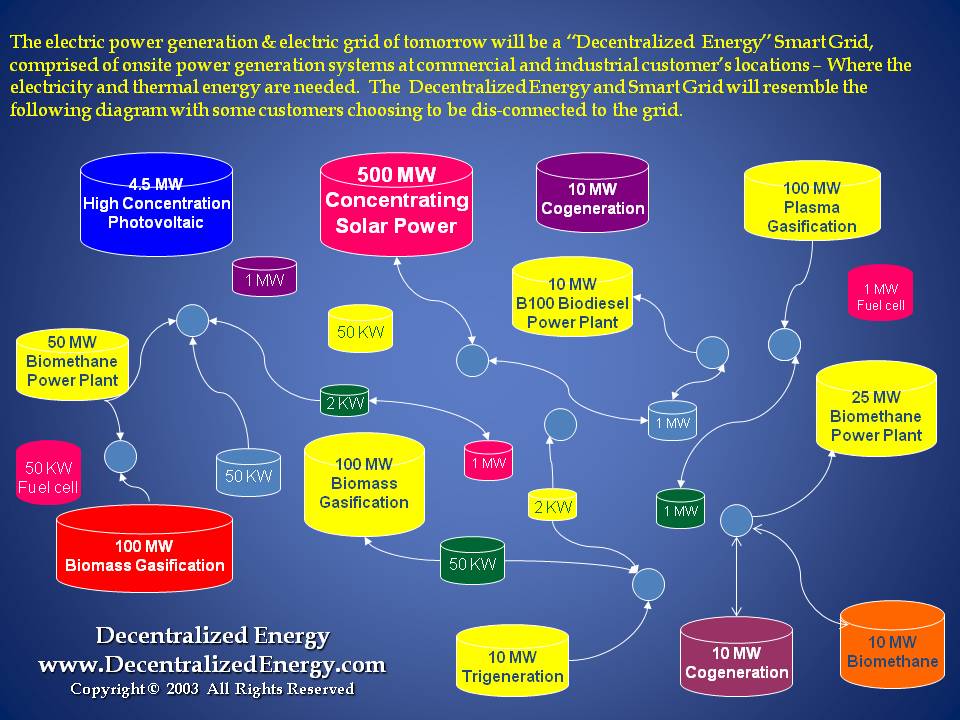
The transmission grid will be upgraded to a "Unified Smart Grid" with green electrons now being wheeled via "High Voltage Direct Current."

Typical "central" power plants and the electric utility companies that own them will either be shut-down, closed or go out of business due to one or more of the following:  failed business model, inordinate expenses related to central power plants that are inefficient, excessive pollution/emissions, high costs, continued reliance on the use of fossil fuels to generate energy, and the failure to provide efficient, carbon free energy and pollution free power

Carbon free energy and pollution free power reduces our dependence on foreign oil and makes us Energy Independent while reducing and eliminating Greenhouse Gas Emissions.

* Some of the above information from the Department of Energy website with permission.

________________________________________________________

Why the U.S. Needs A "Unified Smart Grid"

According to Monty Goodell, the Chairman and Founder of the Renewable Energy Institute, "our country desperately needs to upgrade its' national electric grid.  The grid of today is a relic from the past, that is inefficient and costly.  Originally built in the 1930's, it is costing our nation approximately $120 billion every year due to its' outdated and out-lived existence.  The national power grid as designed and built in the 1930's does not have the efficiencies and capabilities to keep pace with the national power grid's demands of today."

"What we need" according to Mr. Goodell, is a "Unified Smart Grid."  A Unified Smart Grid would be buried underground and "wheels" or transmits the renewable power ("green electricity") from the wind farms of the midwest, and solar farms of the southwest, and geothermal farms of the west, to load centers throughout every corner of the U.S."

According to many estimates, the Unified Smart Grid could be built for about $400 billion.  Through its' increased efficiencies, savings and reliability improvements that it will provide, the nation's new "unified smart grid" will be paid in full, in less than 4 years.

________________________________________________________

Greenhouse Gas Emissions Linked to 
the Loss of Polar Bears

Photo courtesy of Alaska Image Library. U.S. Fish and Wildlife Service
_____________________________________________________

About the Renewable Energy Institute, Climate Science,
Tax-payer Subsidies for Fossil Fuel & Nuclear Industries,
Peak Oil & America's
Clear and Present Danger


Monty Goodell, MBA
Founder and Chairman
Renewable Energy Institute

The Renewable Energy Institute (REI) does not take a stand in the debate on global warming, and if there is global warming, is it "anthropogenic" or is it caused by the sun, or the sun's normal cycles.  Or, if there is " climate change," is it "global cooling" caused by the water vapor in the atmosphere? The stand we take is that we need to invest in renewable energy technologies, producing clean, renewable energy that doesn't pollute the planet, and end America's addiction to crude oil from foreign countries where we now spend OVER $1 Billion/day, to buy the oil we need, and some of those suppliers (muslims in foreign countries) take our dollars and make bombs and bullets and send our boys back in body bags. We need to stop this, and put American's back to work, generating "green power and energy" right here at home.

At the Renewable Energy Institute, we are waiting for the "true" scientists who doing the real research, to provide us with the science and answers critically needed to formulate correct policy - and not the phony " scientists" who are following politically-motivated and profit-driven agendas of the United Nations and government leaders. These phony scientists are not interested in conducting real scientific research.  Their very livelihoods are dependent on the government grants to fund their phony research that have pre-determined conclusions before and "research" is conducted.  

Political-interference by governments, governmental agencies, and bureaucrats that hand out billions of tax-payers dollars to phony scientists to conduct "junk science" and research,  expect the conclusions that supports anthropogenic global warming, or climate change. 

When scientists conclude in their research that they find no evidence of anthropogenic climate change or global warming, they are summarily dismissed, and black-balled from their communities and colleagues, and never again receive funding or grants.  Grants and funding by government bureaucrats with politically-driven agendas to "scientists" expecting their pre-determined results and conclusions supporting anthropogenic global warming must stop.

According to the International Energy Agency (IEA), in 2007

And since 1960:

Taxpayers have bankrolled the oil and gas industry, and the coal industry for 100 years now, and the nuclear industry for 50 years, to keep these dirty fuels and energy "cheap." Take away the tax-payer incentives and tax dollars, and we believe the real cost of gasoline, would be similar to the gasoline cost in Europe - $7.00 - $8.00/gallon!

In the meantime, our U.S. Military is spending billions of tax-payer dollars each year protecting the Straits of Hormuz where much of the world's crude oil is produced and shipped through the straits' international shipping lanes.  Each day, hundreds of "very large crude carriers" pass through the Straits of Hormuz carrying oil from OPEC and the Middle-East to the U.S. and many other countries. 

Isn't it time we take some of the tax-payer dollars supporting the nuclear, coal and oil and gas industries, and start incentivizing clean, renewable energy technologies that don't pollute or harm the environment in any way?  Isn't it time that America ends its reliance on non-sustainable energy sources and stop over $1 billion every day, to oil suppliers from foreign countries, and start putting this money in "solar on every rooftop?!?

Mercury Emissions from Coal Fired Power Plants Far More Harmful to the Planet and People than Greenhouse Gas Emissions

Regarding the harm being caused to our planet from energy use, far more harm is being done to the planet, as well as to people and plants and animals, particularly fish, from the mercury emissions from coal fired power plants than from the coal fired power plants' greenhouse gas emissions.  We surmise that if any polar bears have died as a result of an environmental problem, it was more likely from the high levels of mercury in their food chain, than from greenhouse gas emissions

The Renewable Energy Institute is supporting and advancing renewable energy technologies, as well as reducing and eliminating greenhouse gas emissions and the fossil-fuel problems related to America's oil addiction and ending our dependence on foreign oil.  The renewable energy technologies we support are already deemed to be economic, viable and practical. Solutions such as Solar Trigeneration energy systems (see www.SolarTrigeneration.com for more information) for any kind of facility or building - office buildings, shopping centers, data centers, university campuses, etc. 

Since 2003, a Solar Trigeneration energy system has been providing 100% of the power and energy for a 5,300 sq. ft. office building near downtown Los Angeles, and doing so without any connection to the electric grid, whether its 12 noon or 12 midnite!  

The Renewable Energy Institute is also involved in research and advocacy of "Net Zero Energy" (see: www.NetZeroEnergy.com for more information) and "Net Zero Energy Buildings" (see:  www.NetZeroEnergyBuildings.com for more information).  Net Zero Energy Buildings generate as much (or more) energy than they use, and export their excess power to the grid, which we believe needs to be updated into a "Transmission Superhighway."

Climate Change, Global Warming or Global Cooling?

The past 10 years indicates the opposite of "global warming" has occurred - that the "Earths Fever" has and that global cooling has taken place. 

Weather, on a daily basis, or even an annual basis, is not climate, and climate is not weather. 

"Climate change" is always taking place, from one day to the next, and one week to the next, as well as one year to the next. The planet's climate is an ever-evolving, changing and dynamic process.  

Again, researchers and scientists need to refrain from being political, and stay out of politics, and politicians need to stay out of the way of the scientists and researchers, and let them do their work.  Politicians, government leaders and bureaucrats scientists need true and accurate data and climate research from scientists that do not have a political agenda.

In the meantime, as there may still be 30 years of research before there are conclusive answers concerning anthropogenic climate change, can we "risk" 30 years of our children and grand children's future, should there is a link between climate change and greenhouse gas emissions?  Should we not err on the side of caution?

Hubbert's Peak Oil Predictions Now Proving True?

Marion King Hubbert was a geologist and scientist who worked at Shell Oil company's research lab in Houston, Texas.  Hubbert made several important contributions to geology, geophysics and petroleum geology.  Hubbert is most recognized for the "Hubbert Curve" and " Hubbert Peak Theory" which is now referred to as " Peak Oil. 

Hubbert's life work determined that the world has a finite amount of petroleum that can be produced.  (Similarly, there is a finite amount of coal.) Many scientists and engineers believe we have reached Hubbert's "peak oil" limit.  Hubbert's espouses that when 50% of domestic crude oil production has been reached, that there will be such significant upward demand on prices of the limited supplies of oil production, that the U.S. economy will experience severe economic, social, and political turmoil.

Hubbert's Peak Oil predictions have proven to be true and this is validated as the U.S. in the early 1970's produced about 60% of its' oil demand and imported 40%.  That equation has flipped since then, because our domestic oil production has been on the decline since 1970, so now, due to our declining domestic oil production, we have to import 60% of our oil supplies, to meet our country's oil/energy demands.

The Next Oil Shock Could be the "mother" of All Oil Shocks

How severe our economic calamity and next "oil shock" will depend upon a number of factors, including when this occurs, as well as the following:

1.  the dependence of the individual country upon its own crude oil production to meet its energy needs and to subsidize consumer imports; 

2.  the rate of relative decline in crude oil production; 

3.  the degree of difficulty encountered in replacing missing energy inputs; 

4.  the degree to which our country had prepared in advance for this inevitable geological and economic calamity.

Examples of past "oil shocks" and the economic and political calamities that followed:

United States: Our peak crude oil production of domestic oil occurred in 1970; the first "oil shock" and oil crisis followed in 1973 with the Arab/OPEC Oil Embargo.

Iran: Their peak crude oil production occurred in 1974; They had their islamic revolution 1979 that overturned government and replaced it with radical islam.

Soviet Union: Their peak crude oil production was in 1989; what happened next? 
Their country disintegrated and the collapse of the Soviet Union followed in 1991. 

Indonesia: Their peak crude oil production was in 1991; their financial and government crisis followed in 1997.

Iraq: Iraq's crude oil production was in 1989; they then invaded Kuwait (for their oil) in 1991.

Using Mr. Hubbert's predictions, that beginning around 2000  we would see peak (global) oil production, then, if the country's not weaning themselves off of their oil addiction, and had not begun making the switch to renewable energy, that the negative economic and political calamities would soon follow, including ever-increasing prices of energy that is from fossil fuels. 

Now is the time to begin weaning ourselves off of fossil fuels and making the transition to and increasing the use of renewable energy. If you don't believe in climate change, or global warming, GREAT! Join us in the switch to renewable energy and a fossil-free economy!

________________________________________________________

America's Clear and Present Danger"

America Has INCREASED its' Dependence on Foreign 
Sources of Energy by 50% Since 1973.

America is even more "addicted" to foreign oil today, than we were in 1973 - 1974 when OPEC, Saudi Arabia and other suppliers from the Middle-East  stopped selling us their fossil fuels, and created a significant blow to our economy.


According to the CIA Fact Book, Every Day, the U.S.

PRODUCES:      7,460,000 bbls of oil

CONSUMES:   20,800,000 bbls of oil


This Means that 65% of America's Energy Supplies are Now Imported from Suppliers from Foreign Countries.  

Simply put, about 65% of the gasoline in your car's gas tank, comes from a foreign country.

EVERY day, the U.S. must IMPORT over 13 million bbls of oil from foreign countries and foreign suppliers to meet demand. 


At $80/barrel of oil, this also means that $1,040,000,000.00 American Dollars leave our country, EVERY DAY, to foreign countries/suppliers of our fossil fuels, to pay for the energy we need. 


That's $1 Billion EVERY day leaving our economy, and going to support a foreign country's economy. 


Talk about our foreign trade deficit..... nearly $400 Billion each year, leaves our country to pay for our oil addiction and the energy we need.  To be exact, that's $379,600,000,000.00 American Dollars.

This is NOT acceptable.

America needs to quickly transition to Energy Independence. 

Renewable Energy is the Only Way America Can Achieve Energy Independence. 

Millions of new and sustainable American jobs would be created here at home, if we would end our addiction to foreign fossil fuels, and quickly transition to an economy based on renewable energy and renewable fuels, produced here in the U.S.A. 

The good news is that today, America already has all of the Renewable Energy Resources and Renewable Energy Technologies needed to make American Energy Independence a reality. 



Green Energy

According to Monty Goodell, Founder and Chairman of the Renewable Energy Institute, "our increased dependence and reliance on foreign energy supplies represents a Clear and Present Danger to our national security, our economy, and the lives and livelihood of every American. Energy - including the energy we use from imported fossil fuels, is the very "lifeblood" of the American economy as it is for every industrialized country.  An economy dies without it's lifeblood of energy. This Clear and Present Danger we face is far more serious than the problems related to greenhouse gas emissions.  And while greenhouse gas emissions are very serious issue, in the long-term, pales in comparison to America's vital national security interests and America's economic stability in the short term.  For this reason alone, America needs to transition away from its addiction to foreign energy supplies. And America's abundant renewable energy resources such as the energy we receive from the sun, and renewable energy technologies such as concentrated solar power (CSP) plants - can supply 100% of America's power requirements with a concentrating solar power plant measuring 75 miles by 75 miles, located in the Southwest U.S.  By generating America's power from concentrating solar power plants, America resolves its' short-term Clear and Present Danger as it relates to importing its energy from foreign countries, and the long-term problems relating to greenhouse gas emissions."

Continuing, Mr. Goodell states that "too many Americans have forgotten what happened to us in 1973, when the Arabs and OPEC brought the United States economy to a screeching halt during the OPEC Oil Embargo.  This happened because they (mainly the country of Saudi Arabia) disagreed with our foreign policy and is the reason why they "turned off the tap" of our need for their oil supplies. When Saudi Arabia and OPEC stopped the vital flow of oil to our country in 1973, they caused an "oil shock" that severely and negatively impacted our economy. 

Mr. Goodell's question for us to ponder is, "do these countries who sell us 60% of our daily energy requirements, like us and our foreign policy, or might they leverage our addiction to their fossil fuels, and turn off the tap to make us adjust or revise our foreign policy??  Like any addict, America's foreign policy may be held hostage to its addiction, and in this case, our addiction to foreign oil, may over-ride our national interests."

Have American's forgotten the gas shortages and long lines at 
their gas stations to get gas during the Arab Oil Embargo of 1973? 

"Apparently so."  Mr. Goodell states that "in 1973, America was 'addicted' and 'over the barrel' of foreign oil to the amount of 40%.  Forty percent of our energy 'needs' in 1973 came from countries - many of which didn't like us then, and I'm afraid, many of them still don't.  The difference between 1973 and today - is that today we receive 50% MORE foreign oil now than we did in 1973.  And now we know about the problems relating to greenhouse gas emissions that we didn't know then.  America needs to change course, and change course now, in terms of its' energy supplies and how we keep America's economy strong, without the threat of being held hostage to a middle-east tyrant or regime, that could once again, turn on us, and turn off our supply of foreign oil." 

Remember ????


"Sadly," Monty Goodell continues, " most Americans have forgotten the long lines of people waiting in their cars - lined up and waiting for gasoline at their nearby gas station, with lines that were many blocks long.  And, after waiting 4-5 hours, many even waiting overnight in many places, to finally take their turn to fill up their car with gasoline, only to find that the gas station had run out of gas." 

"Let me Repeat.... That was 1973 when we imported 40% of our daily energy requirements in the form of crude oil from overseas, and from foreign countries - and many of these from countries that don't like us.

Today, over 35 years later, America has yet to learn the lesson.  We cannot continue our reliance on energy from foreign countries that supply us with 60% of the crude oil that our refineries use as a feedstock for producing gasoline and diesel fuel for our cars and trucks comes from overseas. 

America is "over the barrel" and it's not our barrel, but the barrels of oil that we are addicted by and owned by other countries.  Why have we not learned the lessons we needed to learn in 1973 when we were cut-off from the vital energy supplies we need? 

Countries like China, are growing rapidly, and have an insatiable need for crude oil. China, with their booming economy, is increasingly growing in its clout and control over international supplies of crude oil - whether they do this through their ability to buy as much oil as they need on a daily basis, or whether they simply but American drilling rigs, technology, and explore and produce oil and gas from their own fields. China, is buying large amounts of oil for their country, and causing upward pricing on declining supplies. What happens if Russia, with all of their oil and natural gas, along with China and Venezuela, with or without the help of OPEC, decided to NOT sell oil to us????

To be sure, greenhouse gas emissions are a problem, and to some, greenhouse gas emissions are also a Clear and Present Danger, but not to the extent that it presents an imminent Clear and Present Danger

America's reliance for 60% of our energy "needs" coming from foreign suppliers is un-acceptable.

The "driver" to get America to begin reducing and eliminating fossil fuel use should be our nation's national security and the welfare and safety of its citizens. And this can all begin with developing and investing in our own renewable energy resources and renewable energy technologies, let's start by putting solar on every rooftop that has a clear and unobstructed view of the Southern sky. See www.RooftopPV.com  or  www.DistributedPV.com  for more information.  Let's create incentives begin with adopting a national "Feed In Tariff" as Germany did in 1990. 

America, we simply do NOT have the luxury of time on our hands.  We need to end our dependence and reliance on foreign fossil fuels, especially from countries that don't like us! We need to rapidly begin expanding renewable energy resources and renewable energy technologies from our vast and abundant renewable energy resources, such as; solar, solar energy systems, solar cogeneration, solar trigeneration, "solar on every roof," waste to energy, waste to fuel, biomass gasification, B100 Biodiesel, Biomethane, Synthesis Gas, geothermal, E100 Ethanol (from sugar cane and NOT from corn), and wind, where it makes economic sense."   


For more information, call or email
the
Renewable Energy Institute

info@SupportRenewableEnergy.com

______________________________________________________

Are you doing your part to prevent Climate Change and End America's Reliance on Foreign Energy?

Our following EcoGeneration technologies, including our Biomethane, B100 Biodiesel and Synthesis Gas Fuels Generated from our "Waste to Fuel" technologies are Carbon Free Energy and Pollution Free Power solutions that will:

* forever change the way energy is generated and used.

* eliminate or greatly reduce our customer's electric demand charges and electric expenses.

* slow, stop and eventually reverse climate change by reducing and then eliminating anthropogenic greenhouse gas emissions - of which carbon dioxide emissions makes up 80% of all greenhouse gas emissions.

* reduce and eventually eliminate the use of coal and other fossil fuels.

* reduce the need for inefficient and expensive central power plants owned by utility companies. 

* promote energy independence.

* end America's dependence on oil from OPEC and other countries in the Middle-East, Venezuela and end our need for importing natural gas from Russia.


American Energy Plan

www.AmericanEnergyPlan.com


Anaerobic Digester
www.AnaerobicDigester.com


Anaerobic Digesters
www.AnaerobicDigesters.com


B100 Biodiesel
www.B100Biodiesel.com


Battery Energy Storage
www.BatteryEnergyStorage.com


Biomass Gasification
www.BiomassGasification.com


Biomethane
www.Biomethane.com


Building Automation System
www.BuildingAutomationSystem.com


Carbon Dioxide Emissions
www.CarbonDioxideEmissions.com


Carbon Emissions
www.CarbonEmissions.com


Carbon Free Energy
www.CarbonFreeEnergy.com


Clean Power Generation
www.CleanPowerGeneration.com


Cogeneration
www.Cogeneration.net


Distributed Energy Resources
www.DistributedEnergyResources.com


EcoGeneration
www.EcoGeneration.com


Emissions Abatement
www.EmissionsAbatement.com


Emissions Engineering
www.EmissionsEngineering.com


Energy Conservation Measures
www.EnergyConservationMeasures.com


Energy Efficiency Measures
www.EnergyEfficiencyMeasures.com


Energy Efficiency Lighting
www.EnergyEfficientLighting.net


Energy Master Plans
www.EnergyMasterPlan.com


Energy Master Planning
www.EnergyMasterPlanning.com


Engine Sales and Service
www.EngineSalesAndService.com


Generator Sales and Service
www.GeneratorSalesAndService.com


Greenhouse Gas Emissions
www.GreenhouseGasEmissions.com


Net Zero Energy
www.NetZeroEnergy.com


Net Zero Energy Building
www.NetZeroEnergyBuilding.com


No Foreign Oil
www.NoForeignOil.com


Plug In Electric Vehicles
www.PlugInElectricVehicles.com


Pollution Free Power
www.PollutionFreePower.com


Rooftop PV
www.RooftopPV.com


Solar Energy Systems
www.SolarEnergySystems.net


Solar Power Parks
www.SolarPowerParks.com


Solar Cogeneration
www.SolarCogeneration.com


Solar Trigeneration
www.SolarTrigeneration.com


Synchronous Generators
www.SynchronousGenerators.com


Synthesis Gas
www.SynthesisGas.com


Trigeneration
www.Trigeneration.com


Waste Heat Recovery

www.WasteHeatRecovery.com


Waste to Energy
www.WasteToEnergy.net


Waste To Fuel
www.WasteToFuel.com


Wind Power Generation
www.WindPowerGeneration.com


Wind Power Technologies
www.WindPowerTechnologies.com


Zero Emission Energy
www.ZeroEmissionEnergy.com


Zero Emission Power
www.ZeroEmissionPower.com

______________________________________________________

We support the Renewable Energy Institute by donating a portion of our profits to the Renewable Energy Institute in their efforts to reduce fossil fuel use through renewable energy and their goals to end fossil fuel pollution by reducing/eliminating Carbon Emissions, Carbon Dioxide Emissions and Greenhouse Gas Emissions.

The Renewable Energy Institute is "Changing The Way The World Makes and Uses Energy by Providing Research & Development, Funding and Resources That Creates Sustainable Energy via 'Carbon Free Energy,' 'Clean Power Generation' and 'Pollution Free Power' Through Expanding the use of Renewable Energy Technologies."


  Renewable Energy Institute

"Leading the Renewable Energy Revolution"


www.RenewableEnergyInstitute.org

Email:  info(@)Renewable Energy Institute (.)org


Support Renewable Energy
www.SupportRenewableEnergy.com

Support Renewable Energy and the American Energy Plan!

info@SupportRenewableEnergy.com


Copyright © 2011
All Rights Reserved